

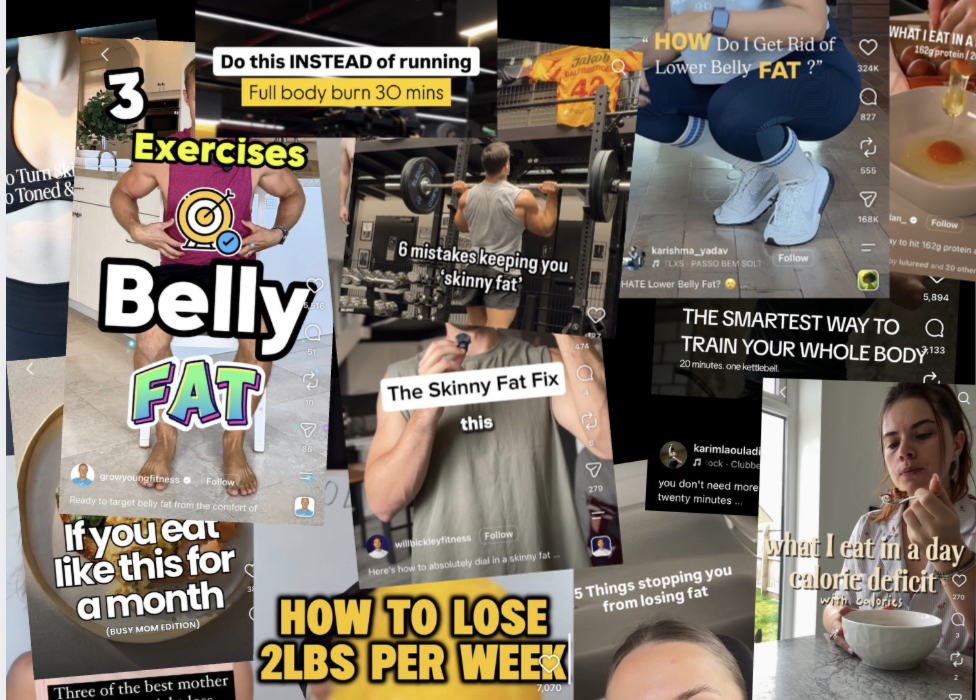
Scroll through Instagram, TikTok or YouTube and you won’t have to look far to find someone sharing the workout they swear by. The exercises that built their body, their exact weekly training split, or the routine they say gets them results.
It’s easy to make the connection: if I train like them, maybe I’ll get the same results.
But if you’re in your 40s, 50s or beyond, you’ve probably already realised that your body doesn’t always respond to exercise in quite the same way it did 10 or 20 years ago. And copying the routine of someone with a completely different body, lifestyle and training history isn’t necessarily going to get you where you want to be.
That doesn’t mean social media workouts are bad. They can be a great source of ideas and inspiration. The problem is assuming that somebody else’s programme is automatically the right programme for you.
Because the workout is only one part of the picture.
You’re seeing the workout, not everything behind it.
When somebody shares their training online, you’re seeing a snapshot. You don’t necessarily know how long they’ve been training, what they do outside the gym, how they eat, how well they recover or what their starting point was.
You also can’t copy their genetics, body structure or training history. And as we get older, there can be even more to consider. Changes in muscle mass, recovery, hormones and mobility can all influence how we feel and perform, while old injuries or niggles that weren’t there in our 20s can affect which movements work best for us now.
That doesn’t mean you should train less or avoid challenging yourself as you get older. Far from it. It simply means your training should reflect the body you have today, rather than somebody else’s.
Your starting point matters more than their workout.
Perhaps you trained regularly in your 20s and 30s but life got busy. Maybe you’ve never really done strength training before. Or perhaps you’ve exercised for years but what used to work doesn’t seem to be getting you anywhere anymore.
Those are three very different starting points, and they shouldn’t necessarily lead to the same programme.
The workout you see online might belong to somebody who has spent years building the strength, mobility and technique needed to do it. Jumping straight into the same exercises, weights or training volume doesn’t automatically speed up your progress. In some cases, it can simply make training feel harder than it needs to.
A good programme should meet you where you are now, challenge you appropriately and then progress as you get stronger. You don’t need to prove what your body can do on day one. You need to give it the opportunity to get better over time.
Your goals may have changed too.
For many people, what they want from exercise changes as they get older.
Looking a certain way might still matter to you, and there’s nothing wrong with that. But perhaps you also want to keep up with your children or grandchildren, feel strong carrying the shopping, protect your bones and muscles as you age, have more energy, get back to doing a hobby you love or simply feel confident in what your body can do.
If that’s the goal, choosing your training based on the physique of somebody you follow online doesn’t make much sense.
Your programme should be built around what you want your body to do for you, not what somebody else’s body looks like.
The same exercise won’t suit everybody.
Even when an exercise itself is perfectly good, the way you perform it might need to be different.
Take a squat. Your mobility, proportions, previous injuries and training experience can all affect which variation feels best and how you perform it. Someone else might comfortably back squat with a barbell, while a different variation could allow you to train the same movement more effectively.
That’s not “taking the easy option”. That’s training intelligently.
The same applies if you’ve got an old knee issue, a shoulder that occasionally complains or you’re returning after a long break. Good training adapts around you rather than expecting you to adapt around it.
What worked five years ago might not be what you need now.
This is particularly important as we move through different stages of life.
Your body changes. Your goals change. Your schedule changes. Your experience changes. Something that worked brilliantly for you five or ten years ago might need adjusting today and something that works today may need adjusting again in the future.
That’s one of the biggest differences between following random workouts and having an actual training programme. A workout tells you what to do today. A programme considers where you’re starting, where you want to get to and what needs to happen along the way.
Good coaching takes that a step further. It means somebody can see how you’re responding, adjust when something doesn’t feel right and keep progressing your training as you get stronger.
So, should you stop following workouts online?
Not at all. There are plenty of good ideas out there and finding inspiration that makes you want to move is never a bad thing.
Just remember that inspiration isn’t personalisation.
Instead of asking, “What workout did they do to get that body?”, ask yourself a few different questions: What do I want to be able to do? What would feeling stronger change for me? What can I realistically commit to each week? What does my body need right now?
Those answers are much more useful when deciding how you should train.
Because ultimately, you don’t need somebody else’s workout for somebody else’s body. You need training that works for yours.
Not sure what’s right for you?
You don’t need to know exactly what exercises to do or how your programme should look before you start. That’s what good coaching is there for.
At The Confidence Coach, we work with you from where you are now, taking into account your goals, experience, confidence and anything else we need to consider, then adapt your training as you progress.
Because getting older shouldn’t mean expecting less from your body. It should mean getting smarter about how you look after it.